
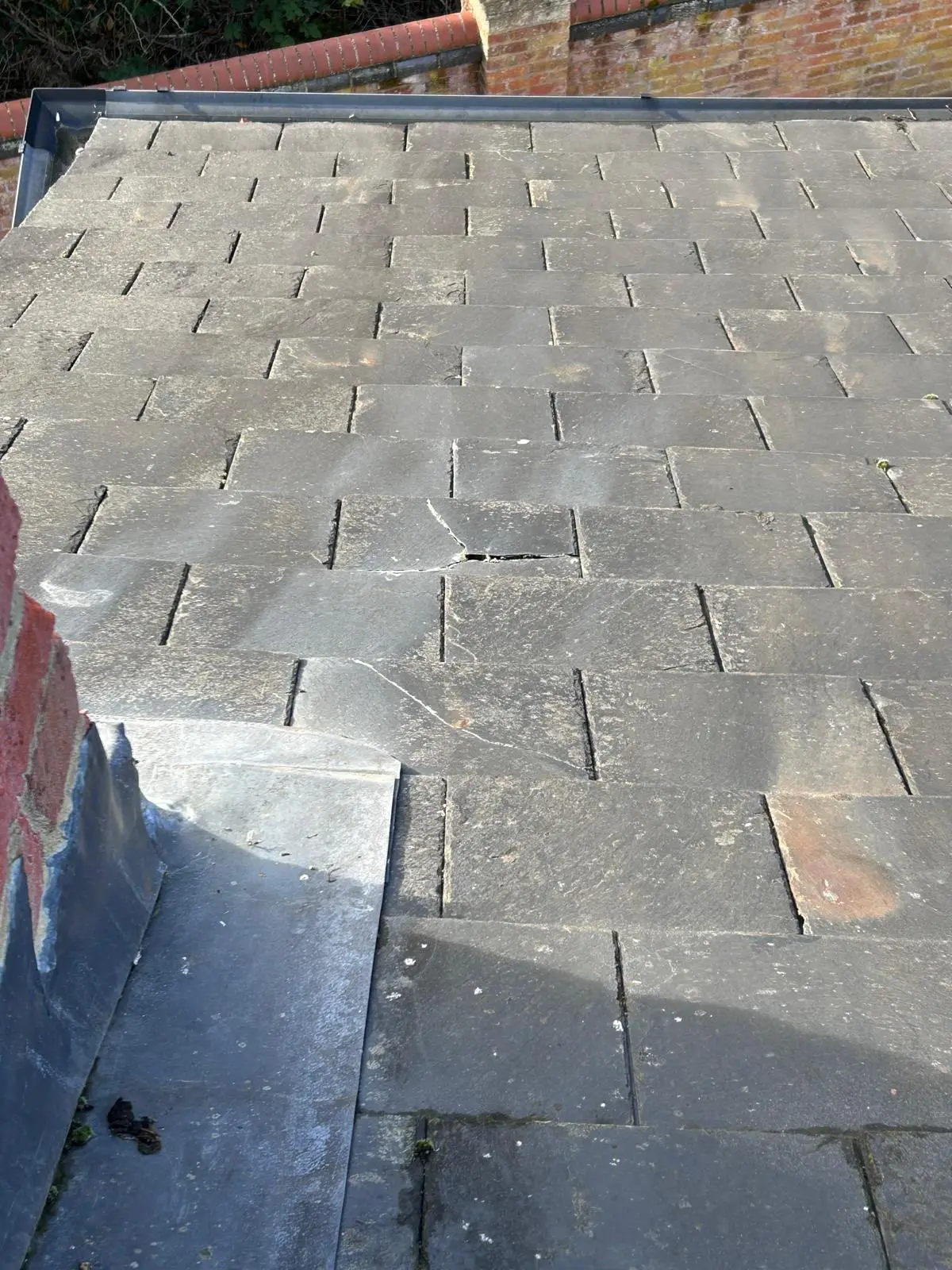
Most chimney leaks aren't the chimney itself. They come from where the chimney meets the roof: worn or missing lead flashing, no soakers under the tiles, or a cement fillet that's cracked away. The next most common cause is tired pointing and soft bricks letting rain soak into the stack. Get the joint between chimney and roof checked first, before anyone talks about a rebuild.
Older houses across Oxford have a lot of chimneys, many over a hundred years old. Most are no longer used for fires, but they still have to keep the rain out.
In short
- Damp on a chimney breast or the ceiling next to it, worse after rain, usually means water is getting in at the chimney.
- The usual culprits: lead flashing, missing soakers, cracked cement fillets, worn pointing and crumbling bricks.
- Repointing fixes tired mortar. Bricks that are soft or blown need cutting out and replacing. A full rebuild is a last resort.
- Lead needs to be properly dressed and tucked into the brickwork. Cement and sealant are a stop-gap, not a fix.
- Don't go up yourself. A drone survey shows the chimney close up without anyone on the roof.
How do I know my chimney is leaking?
Water from a chimney tends to show up in a few places:
- a damp or brown stain on the chimney breast, often upstairs or in the loft;
- a wet patch on the ceiling right next to the chimney;
- damp timbers, felt or insulation around the stack in the loft;
- peeling paint or wallpaper on the chimney breast that gets worse after heavy rain.
From the ground, use binoculars or your phone's zoom. Look for lead that's lifted or has gaps, missing or crumbling mortar between the bricks, cracked cement where the chimney meets the tiles, a leaning stack or loose pots, and plants growing out of the brickwork.
What causes a chimney to leak?
Lead flashing that's worn, lifted or badly fitted
Flashing is the lead that seals the joint between the chimney and the roof. Over the years it can split, lift in the wind, or come out of the mortar joint it's tucked into. On older houses it's often been patched more than once.
No soakers
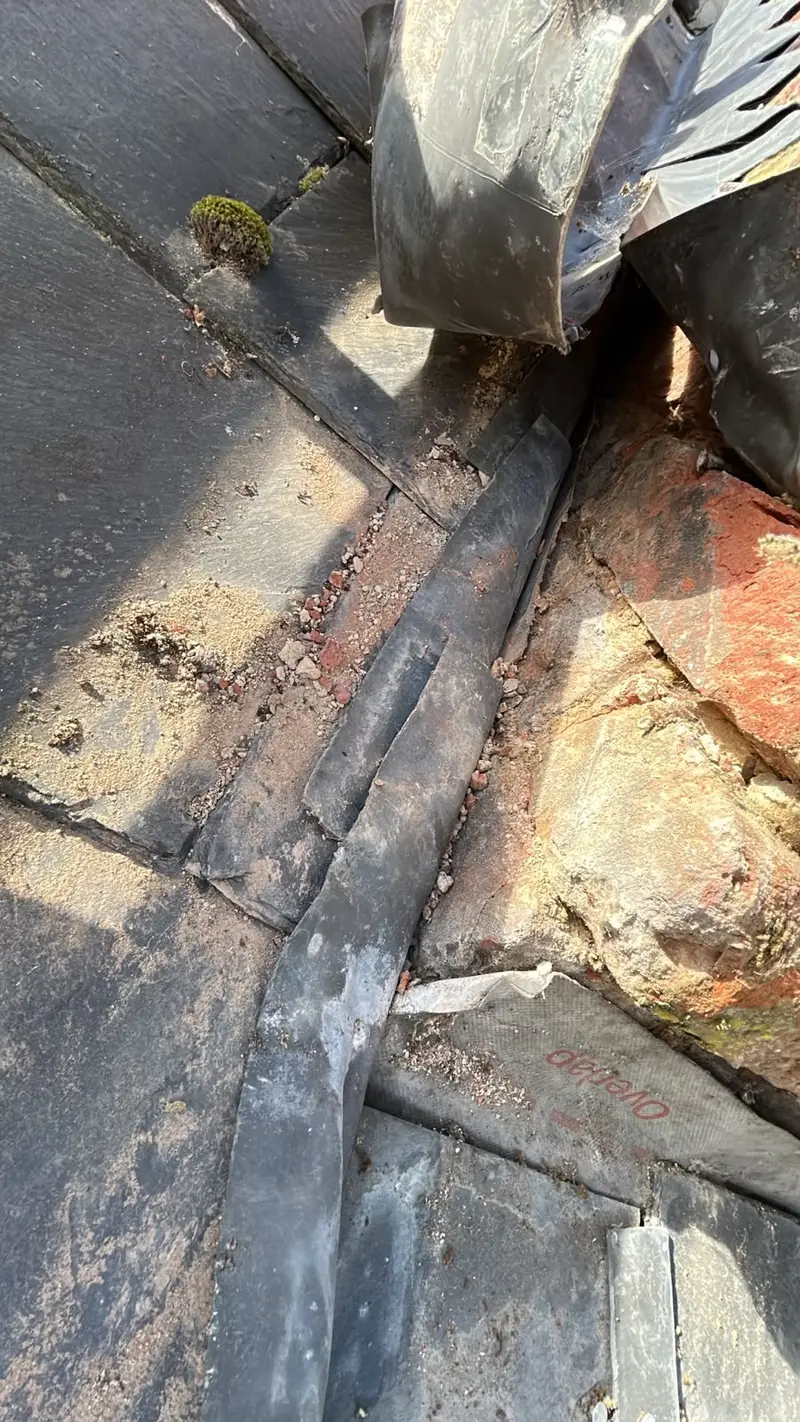
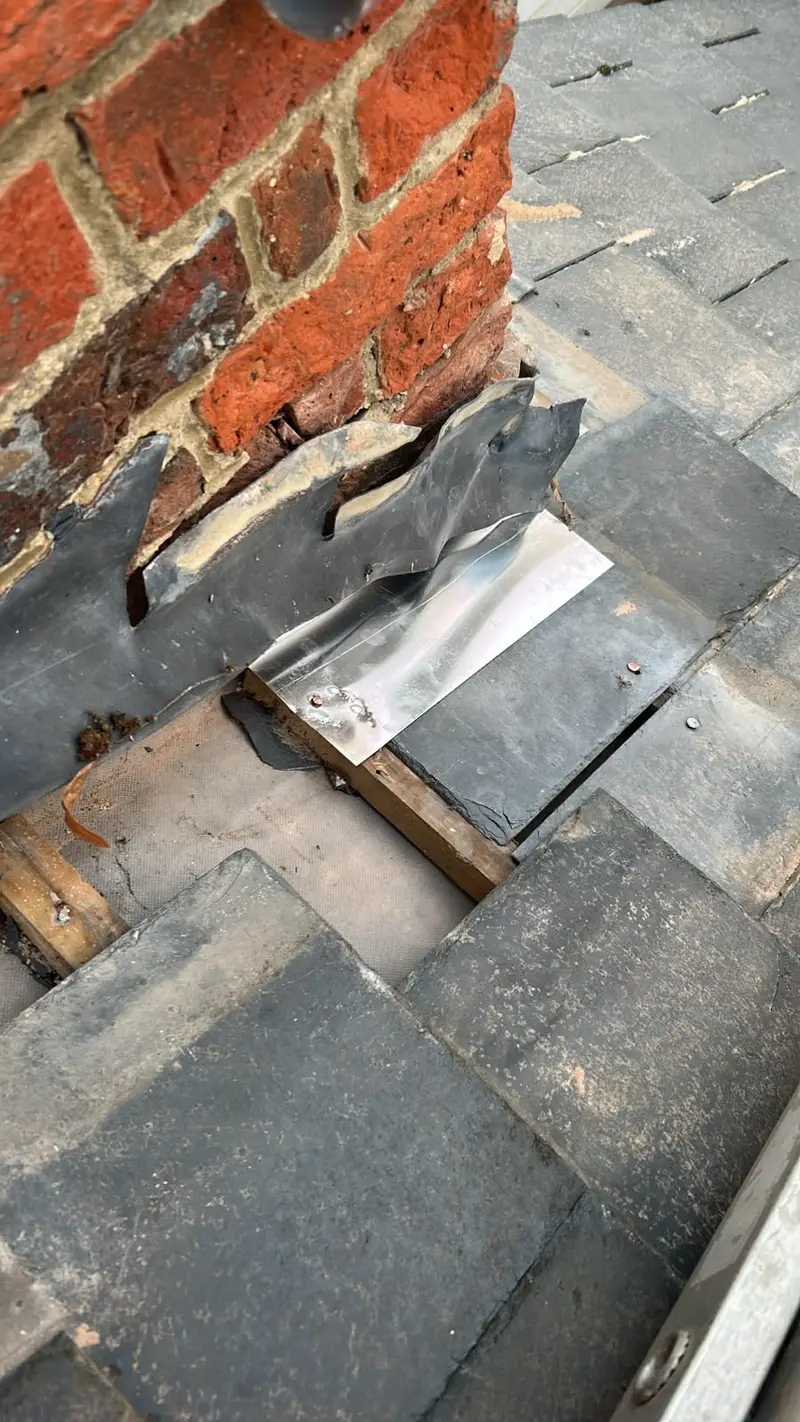
Soakers are small pieces of lead that go under each tile or slate up the sides of the chimney, with the flashing dressed over the top. Without them, water runs down the side of the stack and straight under the roof covering.
A recent job: we found a roof that had been replaced about ten years ago, and no soakers had been fitted round either chimney. Water had a clear path in. We stripped back to the slates, fitted new soakers and new flashing round both stacks, then finished the leadwork and pointing.
Cement fillets instead of lead
Some chimneys have a strip of cement (a fillet) where the stack meets the tiles instead of proper lead. Cement shrinks and cracks as the house moves and the frost gets at it, then lets water straight in. Replacing it with lead flashing is the lasting fix.
Worn pointing and soft bricks
Pointing is the mortar between the bricks. Once it's washed out, rain soaks into the stack and works its way down into the house. Old, soft bricks are the same: they crumble, don't hold new pointing, and let water through.
Should I repoint or rebuild my chimney?
It depends on the state of the bricks:
- Repoint when the bricks are sound but the mortar is crumbling or missing. We rake out the old pointing and replace it. On older brick and stone, a softer lime-based mortar is usually right, because hard cement can damage soft bricks.
- Cut out and replace bricks when only some are soft, cracked or blown. On another recent chimney job some very bad bricks had to be cut out and replaced before it could be repointed and get new pots.
- Rebuild only when the stack is unsafe, leaning, or too many bricks have failed for repairs to last. It's the last resort, not the first answer.
If someone recommends a rebuild, it's fair to ask what's wrong with the bricks and whether the flashing has been ruled out.
Lead or a lead substitute?
We fit proper lead. Some roofs have artificial flashing (a lead substitute) round the chimney, and when we find it we replace it with lead. Lead can be shaped tightly to the brickwork and tiles, and dressed into the joints properly, so it seals the gap far better.
What shouldn't I do?
- Don't climb on the roof to look. Chimneys are at the highest, most awkward point.
- Don't smear sealant or mastic round the flashing. It hides the problem and fails again within a winter or two.
- Don't ignore damp on a chimney breast. Water sitting in the stack and the timbers around it does more damage the longer it's left.
What we see on Oxfordshire chimneys
Victorian and Edwardian terraces in East Oxford and Jericho, and the older houses around Headington, often have tall brick stacks shared between neighbours, with lead flashing that's been patched over the years. Plenty of chimneys across the county are no longer used, so nobody looks at them until damp shows inside. And when a roof has been replaced, the leadwork round the chimney is sometimes skimped, as the job above shows.
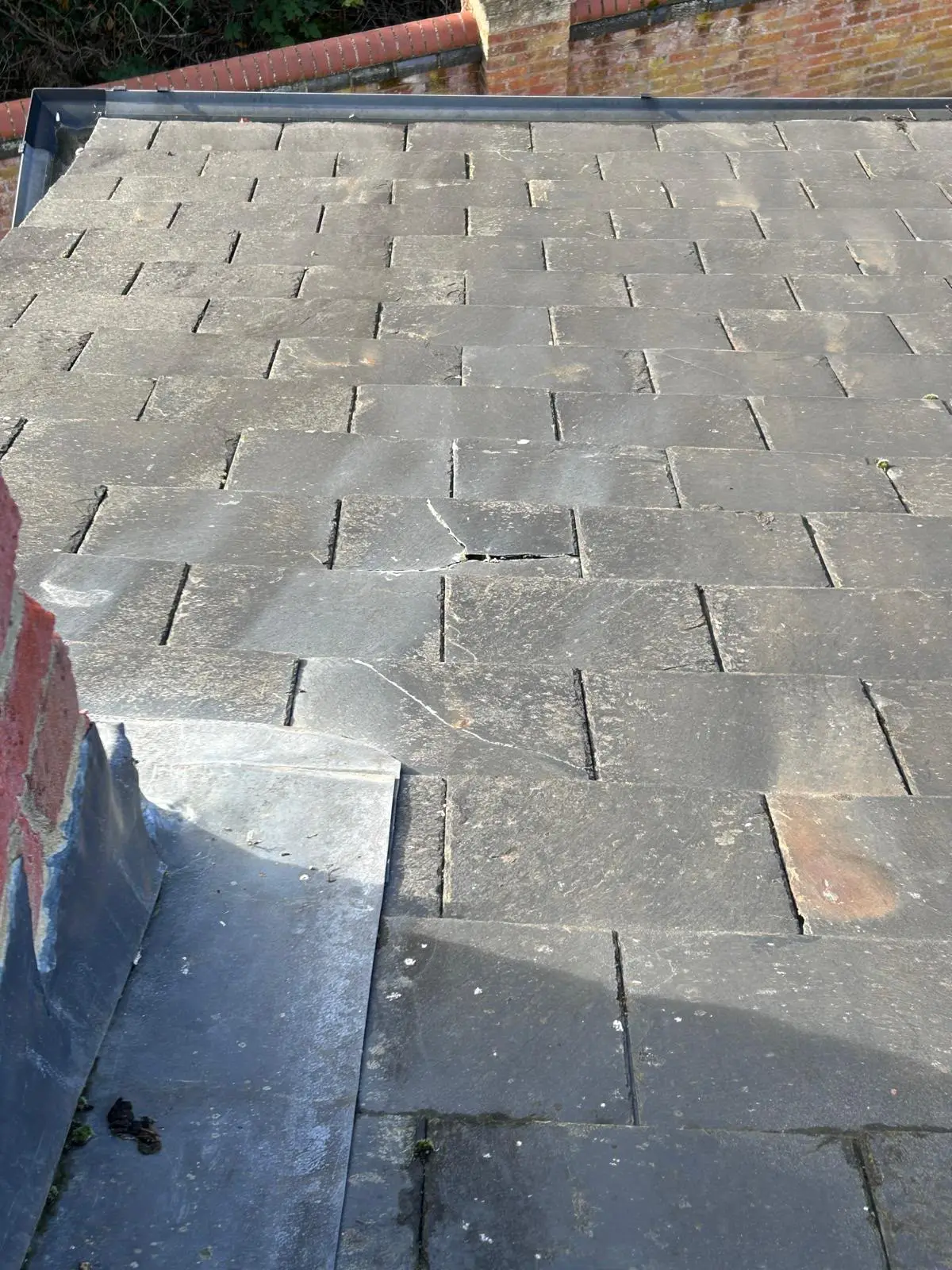
Recently we had scaffold up in Headington to repoint two chimneys and fit new leadwork round them. Tired old pointing and lead are one of the main ways water gets in, so it's worth sorting before winter, whether you're in Oxford or anywhere in Oxfordshire.
FAQs
Can a chimney leak if it's not used?
Yes. A disused chimney still has lead, pointing and bricks that face the weather. If any of those fail, rain gets in the same way. Unused chimneys are often the ones that leak, because no one checks them. If the chimney is capped, check the cap is sound too.
What are chimney soakers?
Small pieces of lead fitted under each tile or slate up the sides of the chimney. The flashing then covers them. Together they stop water running down the side of the stack and under the roof. If a roof is re-covered without them, the chimney will usually leak.
Is a cement fillet as good as lead flashing?
No. Cement fillets crack as the building moves and with frost, and once cracked they let water straight in. Lead flashing, properly tucked into the brickwork and dressed over the tiles, moves with the roof and lasts far longer.
How long does chimney repointing take?
Most chimneys take a day or two once access is up, depending on size and how many bricks need replacing. Scaffold is usually needed so the work can be done safely and properly. We'll explain exactly what's needed when we quote.
Do I need scaffolding for chimney repairs?
Usually, yes. Repointing and leadwork need safe access all round the stack. For small jobs on some roofs other access may be possible. We'll tell you what your chimney needs after a survey.
Get your chimney checked
Revive Roofing & Building is a family-run roofing firm based in Headington, Oxford, with over 20 years' experience in the trade. We're fully insured and cover the whole of Oxfordshire. See our chimney and leadwork and roof repairs pages, or read our winter roof checklist and what to do if your roof leaks after heavy rain.
Book a free drone roof survey: call 01865 537500 or WhatsApp 07367 194263.