
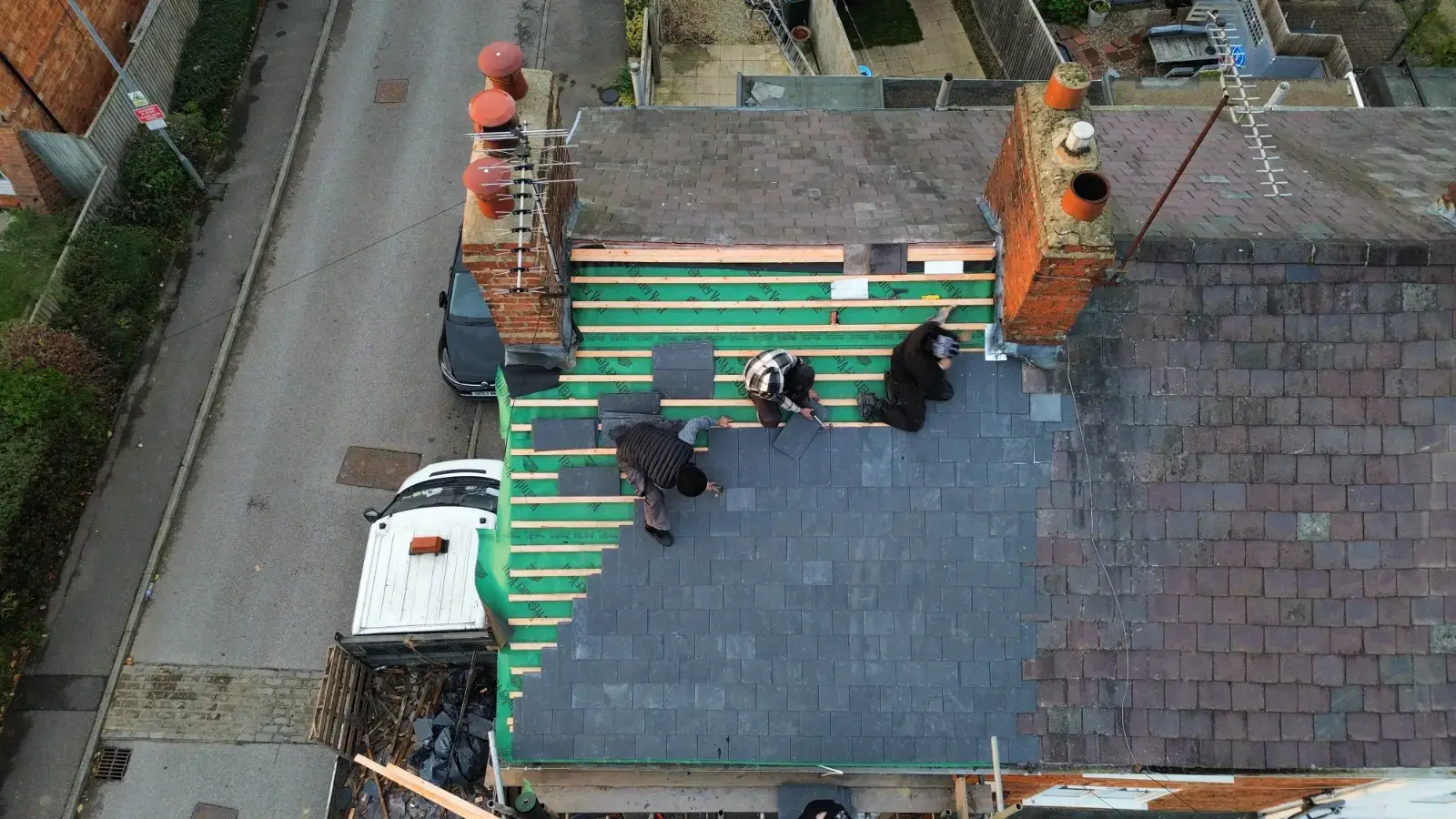
Before winter, spend twenty minutes checking your roof from the ground and from inside the loft. Look for slipped or missing tiles, loose mortar on the ridge and in the valleys, blocked gutters, and any daylight through the felt in the loft. You don't need a ladder for any of it. If you spot one of these, get it fixed now, while it's a small job, rather than after a storm has pushed water inside.
Most winter call-outs we get start with something small that's been left: a bit of cracked mortar, one slipped tile, a gutter full of leaves. Winter wind and rain then find the gap.
In short
- Check from the ground with binoculars or your phone's zoom: tiles, ridge, valleys, chimney, gutters.
- Look for bits of cement in your gutters or on the ground. It often means the ridge mortar is breaking up.
- Go in the loft with a torch. Daylight through the felt means water can get in too.
- Damp patches on ceilings and walls in winter need checking. They can be the roof, gutters or condensation.
- Stay off the roof and off ladders in wet, icy or windy weather. Leave anything at height to a roofer.
What can I check from the ground?
Pick a dry, bright day. Walk round the house and look at every side of the roof, using binoculars or the zoom on your phone camera. Take photos as you go so you can compare next year, or send them to a roofer.
- Tiles and slates. Look for any that have slipped down, cracked, gone missing or sit at a different angle to the rest. A slipped tile leaves the felt underneath open to the weather.
- The ridge. The ridge tiles run along the very top of the roof. On a lot of houses they're bedded on mortar (cement). Look for gaps under them, cracks, or tiles that look loose or out of line.
- The valleys. A valley is where two slopes of roof meet in an inside corner. Check for loose or missing mortar, cracked tiles and a build-up of leaves or moss.
- The chimney. Look for leaning pots, missing mortar between the bricks, and lead flashing (the metal strips where the chimney meets the roof) that's lifting or has gaps.
- Gutters and downpipes. Look for sagging gutters, plants growing out of them, and water stains on the wall below. The best time is during heavy rain: water spilling over the edge means a blockage or a gutter that's dropped.
- On the ground and in the gutters. Bits of broken tile or lumps of cement in the gutter, on the drive or in flower beds are a warning sign. They've come off your roof.
What should I look for in the loft?
If you have safe loft access and boards to stand on, take a good torch up on a dry day. Never step between the joists, or your foot can go through the ceiling.
- Daylight through the felt. Turn the torch off for a minute and let your eyes adjust. If you can see daylight through the felt (the sheet under the tiles), the felt is letting water in as well. Some very old roofs were built without felt, so if you see bare tiles from inside, ask a roofer to take a look.
- Signs of water. Look for damp or stained patches on the felt or timbers, wet or flattened insulation, water marks running down the rafters, and rust on nails. Pay most attention to the area under the ridge, around the chimney and under any valleys.
While you're up there, check the gaps at the eaves (where the roof meets the walls) aren't stuffed with insulation. Air needs to move through the loft. Without it, winter condensation can soak the timbers and felt from the inside.
Why is old ridge mortar such a problem?
The ridge is the top of the roof, so any water that gets in there has the whole slope to run down. Mortar under ridge tiles cracks over time with frost and movement, then washes out in heavy rain.
A recent job: we were called to a roof where the old cement under the ridge tiles was falling out. Rain was getting in at the ridge, running under the felt and down the inside of the roof, and it had rotted the battens (the timber strips the tiles hang on) on its way down. Nothing showed inside the house until the damage was done. We stripped the ridge, cleared out all the old cement and fitted a dry ridge system, where every ridge tile is clipped and screwed down instead of relying on mortar. There's nothing left to crack and wash out.
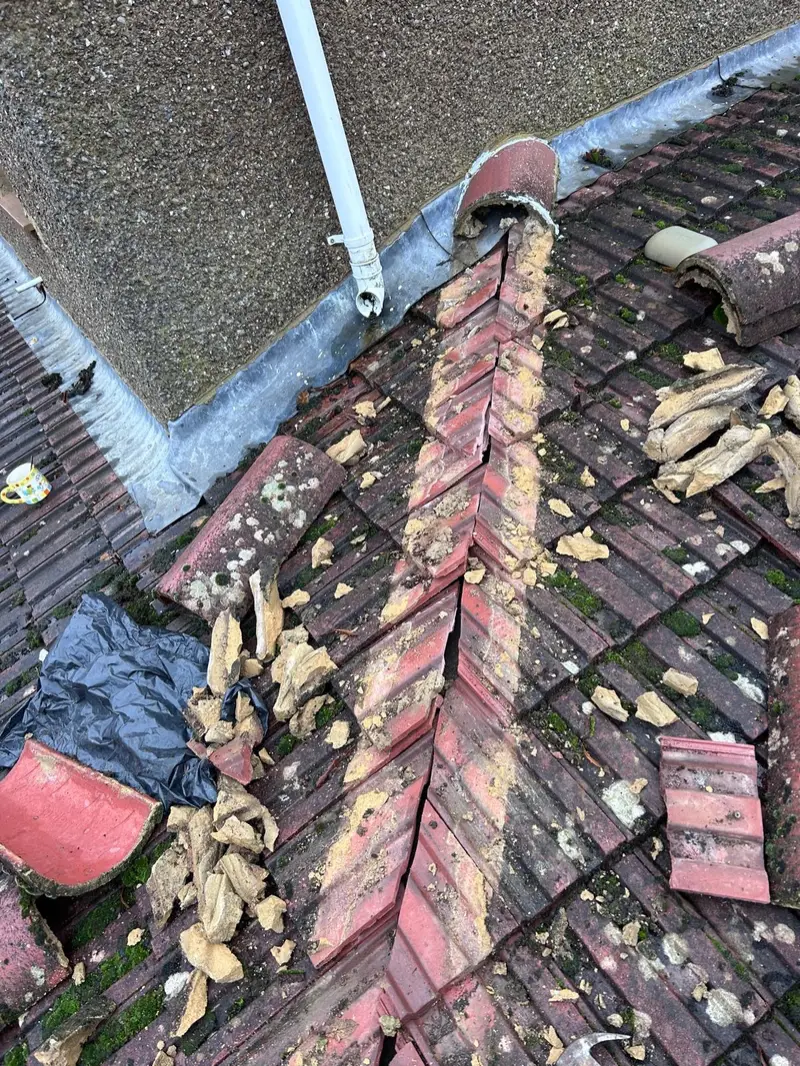
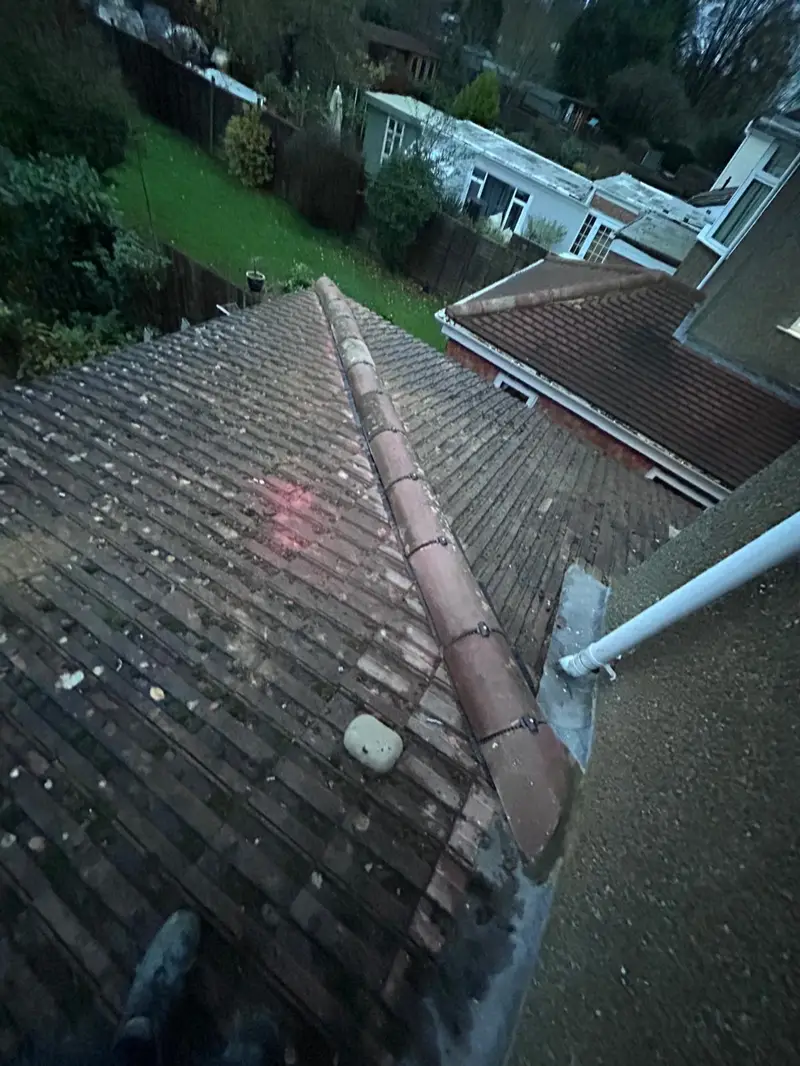
If you've seen lumps of cement in your gutters, it's worth getting the ridge looked at before winter.
Is winter damp coming from my roof?
We find a lot of damp on winter call-outs. It can come from several places, and the fix is different for each:
- The roof: a slipped tile, cracked ridge or valley mortar, or failed lead lets rain in. Patches usually appear on upstairs ceilings or at the top of walls, and get worse after rain.
- Gutters and downpipes: a blocked or leaking gutter soaks the wall below. You'll often see a damp patch on the inside of an outside wall, and green staining outside.
- Condensation: warm, wet air from cooking, showers and drying clothes settles on cold walls and ceilings. It's worst in corners, behind furniture and on window frames, and often brings black mould. It doesn't follow the rain.
- Rising damp: water coming up from the ground shows as a tide mark low down on walls, usually under a metre high.
If you're not sure which you've got, our damp proofing team can find the cause. We'll tell you straight if it's a roof or gutter job rather than damp proofing.
What shouldn't I do?
- Don't climb on the roof. Wet, frosty or mossy tiles are lethal, and a fall from even one storey can kill.
- Don't use a ladder in wind, rain or frost, or on your own.
- Don't patch it with sealant or tape from outside. It rarely lasts and it can hide the real cause.
- Don't leave it until spring. A small gap lets water into the felt, battens and insulation all winter. That's how a small repair turns into a big one.
What we see on Oxfordshire roofs
Oxfordshire has every sort of roof, and they each let water in their own way. Older terraces and Victorian houses in Oxford often have slate roofs with lead valleys and chimneys well over a hundred years old, so leadwork and chimney mortar are common problems. Lots of homes across the county have flat-roofed extensions, dormers and garages, where water sits and finds any split. And with so many trees around Oxford, gutters and valleys fill with leaves fast every autumn.
The faults we see most when the weather turns are slipped tiles, ridge and valley mortar breaking up, blocked gutters, and the damp that comes from all three. Most of them are quick to fix if they're caught before the storms, whether you're in Oxford, Headington or out towards Witney.
FAQs
When is the best time to get my roof checked?
Autumn, before the worst of the winter weather and after most of the leaves have fallen. That gives time to sort any problem while the weather still allows a proper repair. It's also worth a quick look from the ground after any big storm, in case wind has lifted or moved tiles.
Can I clear my own gutters?
If they're low, such as on a bungalow or a single-storey extension, and you can do it from a sound ladder on firm, dry ground with someone holding it, yes. For anything higher, or if the gutters are cracked or sagging, leave it to a roofer. Gutter clearing is one of the most common ways people fall.
What is a dry ridge system?
It's a way of fixing ridge tiles without mortar. Each tile is mechanically clipped and screwed down over a breathable roll. With no cement to crack in the frost and wash out, it needs far less upkeep than a mortar-bedded ridge, and it lets the roof breathe.
Is it normal to see some light in the loft?
Not through the felt. A small amount of light at the eaves can be normal ventilation. But if you can see daylight through the felt itself, or through gaps between tiles above it, water can get in the same way and it needs checking.
Do you charge to check my roof before winter?
We offer free roof surveys using a drone, so you can see the state of your roof on screen without anyone climbing up. You'll get a written, no-obligation quote for anything that needs doing.
Get your roof checked before winter
Revive Roofing & Building is a family-run roofing firm based in Headington, Oxford, with over 20 years' experience in the trade. We're fully insured, cover the whole of Oxfordshire and offer emergency call-outs. See our roof repairs, chimney and leadwork and gutters, fascias and soffits pages. Already got a leak? Read what to do if your roof leaks after heavy rain.
Book a free drone roof survey: call 01865 537500 or WhatsApp 07367 194263.