
If water is coming through your ceiling after heavy rain, the first job is to protect the room, not the roof. Catch the water, move anything valuable, keep away from wet light fittings, and take photos. Then call a roofer. Don't go up a ladder or onto the roof while it's wet.
Most leaks after a downpour come from a few common places: a slipped or cracked tile, tired leadwork around a chimney, a blocked valley or gutter, or a flat roof that's holding water. A roofer can usually find the cause in one visit.
In short
- Put a bucket under the drip and move furniture, rugs and electrics out of the way.
- If water is near a light or socket, keep clear and switch off that circuit at the fuse box if it's safe to reach.
- If the ceiling is bulging, don't stand under it.
- Take photos and video of the damage before you tidy up. Your insurer may want them.
- Stay off the roof. Wet tiles and slates are lethal, and you can make the leak worse.
What should I do in the first hour?
- Catch the water. A bucket or washing-up bowl under the drip, with an old towel in it to stop splashing. Empty it before it's full.
- Clear the area. Move anything you don't want ruined. Cover what you can't move with a plastic sheet or bin bags.
- Check the electrics. Water and electricity don't mix. If water is running near a light fitting, ceiling rose or socket, don't touch it. If you can safely reach the consumer unit (fuse box), switch off that circuit. If in doubt, call an electrician.
- Look at the ceiling. A ceiling that's sagging or bulging is holding water. Keep people and pets out from under it.
- Take photos. The ceiling, the stain, the floor, anything damaged. Add a short video of the drip if you can.
- Call a roofer. Tell them where the water is coming in, when it started and how heavy the rain was. Photos help them come prepared.
Can I check the loft myself?
If you have safe loft access and boards to stand on, it's worth a careful look with a torch. You're looking for:
- wet or stained insulation;
- damp patches on the underside of the roof (the felt or boards under the tiles);
- daylight showing through;
- water running down a rafter or along a chimney breast.
Put a bucket or tray under any drip you find. Never step between the joists, or your foot will come through the ceiling. If the loft is cramped or you're not sure, leave it for the roofer.
Why is my roof only leaking in heavy rain?
A roof can stay dry in light rain and leak in a downpour. Heavy or wind-driven rain gets into gaps that normal rain doesn't reach:
- Slipped, cracked or missing tiles or slates. Wind can lift one tile and let water run straight onto the felt.
- Leadwork. Lead flashing seals the joins around chimneys, walls and valleys. When it cracks or lifts, heavy rain runs in behind it.
- Blocked valleys and gutters. Leaves and moss stop water draining away, so it backs up under the tiles. October and November are the worst months for this.
- Flat roofs. Water that pools (called ponding) finds any small split in felt or the seams of older roofs.
- Chimneys. Cracked pots, worn mortar and failed flaunching (the cement at the top of the stack) let water down inside the chimney.
- Old or torn underlay. On older roofs the felt under the tiles can be brittle, so any water that gets past a tile goes straight through.
The drip on your ceiling is not always under the hole. Water can run along a rafter for a metre or two before it drops, which is why finding the source is a roofer's job.
What shouldn't I do?
- Don't climb on the roof, even if you can see the problem. Wet tiles and moss are like ice.
- Don't go up a ladder in wind or rain.
- Don't poke a hole in a bulging ceiling unless a professional tells you to. If it gives way you get a lot of water at once.
- Don't use sealant or tape on the outside as a fix. It rarely holds and it can hide the real cause.
- Don't wait for it to dry out and hope. A small leak soaks insulation and timber, and it gets more expensive the longer it's left.
Will my home insurance cover it?
It depends on your policy and the cause. Policies often treat sudden storm damage differently from wear and tear. Check your policy wording or ring your insurer before work starts, and keep your photos. Your roofer can tell you what caused the leak, which helps when you speak to them.
What will the roofer do when they arrive?
On a leak call-out, a roofer will usually:
- Look at the inside damage and the loft to narrow down where the water's coming in.
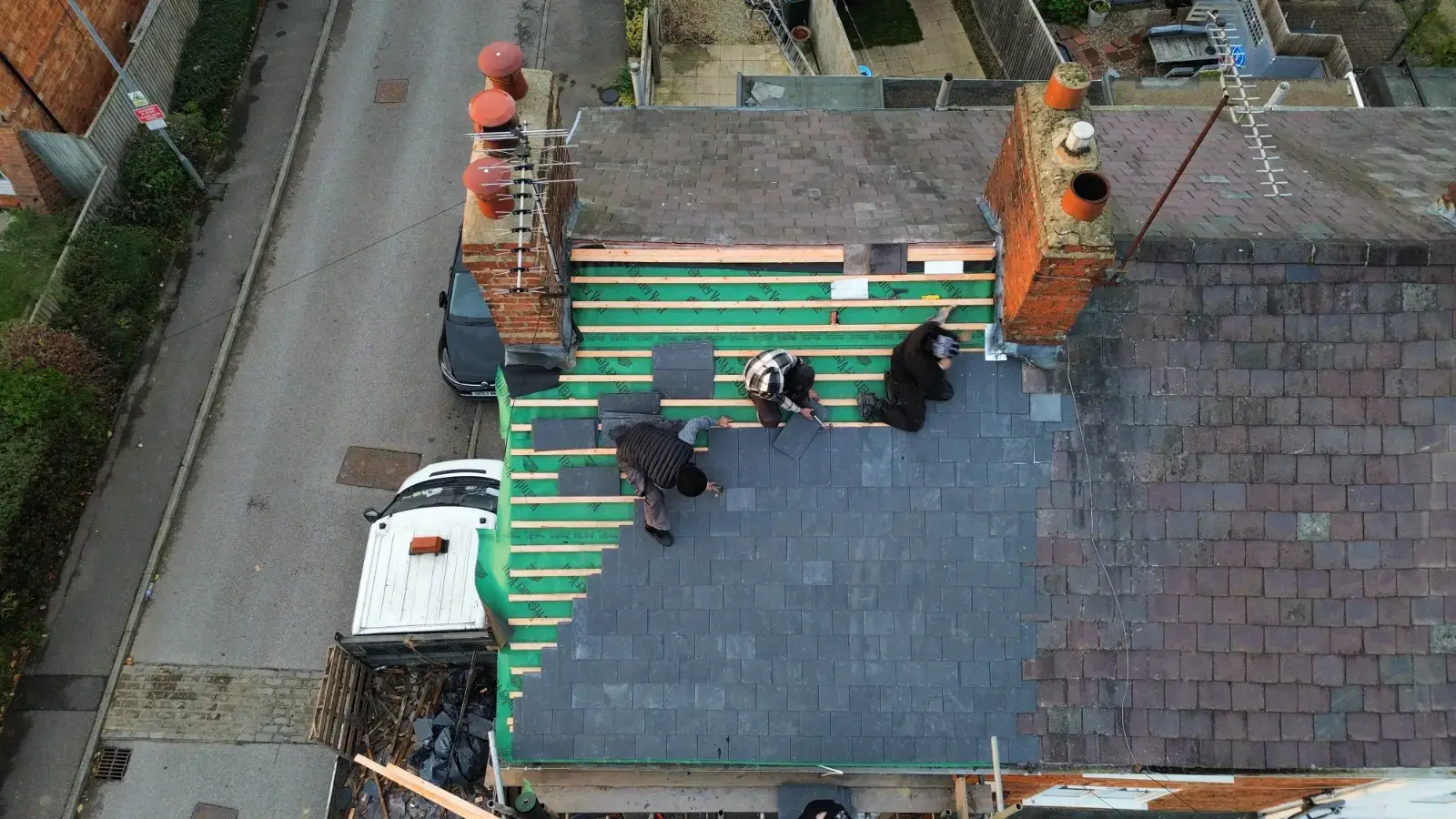
- Inspect the roof itself. At Revive we use a drone, so we can show you the problem on screen without anyone climbing up first.
- Make it watertight. If the weather means a full repair has to wait, we'll make a safe temporary repair to stop more water getting in.
- Explain what they found and give you a written quote for the proper repair.
A recent job in Oxford: this October, a customer in Oxford rang us with water coming in through their flat roof. We came out, covered the roof to stop any more water getting in, and then came back and laid a brand-new flat roof. In the customer's words: "They done a temporary fix by covering it then came back and put a new ... flat roof on I'm very happy with them." (Yousaf, Google review, October 2026)
On another call-out in Oxford, our free drone survey showed the customer the cause of the leak on screen straight away, and the leak was fixed within 24 hours.
What we see on Oxfordshire roofs
Oxfordshire has every kind of roof, and each tends to leak in its own way. Older terraces and Victorian houses in Oxford often have slate roofs with lead valleys and chimneys that are well over a hundred years old, so leadwork and chimney flaunching are common culprits. Plenty of homes across the county have flat-roofed extensions, dormers and garages, where ponding and tired felt cause leaks in heavy rain. And in autumn, gutters and valleys under trees fill with leaves fast.
From the call-outs we get, the most common causes after heavy rain are slipped or broken tiles, worn-out flat roofs on extensions and garages, and gutters blocked with leaves, which push water back under the roof edge. Most of these are a quick fix if they're caught early.
If you've got a leak anywhere in Oxford or Oxfordshire, from Headington to Abingdon and beyond, we can usually get to you quickly.
FAQs
Is a roof leak an emergency?
If water is coming through a ceiling, near electrics, or the ceiling is bulging, treat it as urgent and call a roofer straight away. A slow drip into the loft is less urgent, but still book it in soon. Water that sits in insulation and timber does more damage every day, and a cheap repair can turn into a bigger one.
Can I put a tarp over the roof myself?
We'd advise against it. Getting a tarp on safely means working at height on a wet, slippery roof, often in wind. That's how people get badly hurt. A roofer has the kit to make it safe. Put your effort into protecting the inside of the house instead.
How do I know if the leak is the roof or something else?
If it only appears when it rains, it's very likely the roof, gutters, chimney or a window or wall nearby. If it drips whether it's raining or not, it may be plumbing, such as a tank or pipe in the loft. A damp patch that grows in cold weather can be condensation. A roofer can tell you which.
Why does the leak stop when the rain stops?
Because water only gets in while the roof is wet. The gap is still there, and the timber and insulation underneath may still be damp. The next heavy shower will usually bring it back, often worse. Get it checked while you can still see the stain and remember where it was.
Do you charge to come out and look at a leak?
We offer free roof surveys, using a drone so you can see the problem on screen. You'll get a written, no-obligation quote for the repair before any work starts.
Got a leak? We'll find it
Revive Roofing & Building is a family-run roofing firm based in Headington, Oxford, with over 20 years' experience in the trade. We're fully insured and cover the whole of Oxfordshire, with emergency call-outs when you need them. See our roof repairs, flat roofing and chimney and leadwork pages, or get your gutters sorted before the next downpour.
Book a free drone roof survey: call 01865 537500 or WhatsApp 07367 194263.
Getting ready for winter? See our winter roof checklist.